The deeper meaning

When I was studying languages at uni, I had to wade through three years of soul-crushing literature analysis courses for English. We tore books apart and analysed aspects of characters that the author never gave a second thought. I hated it with a passion. It felt like we were putting messages in the authors’ mouths and claiming that they had meant to communicate them.

Then, after I had finished my degree, I realised movies and books had ultimately changed for me. I saw patterns and themes. I followed character growth, regression or lack of either. I was far more aware of stilted story telling and (actually mostly) lack of plot. As a matter of fact, for a few years, I didn’t enjoy any of the stories I read or watched. My uni training had made me too critical. Even good stories have plot holes and inconsistencies.

Then came a turnaround for me. My husband was following the Sword of Truth series by Terry Goodkind and I decided to try and catch up to him. Though the main characters’ whining got to me more than the first time I had read the first book, I was just enjoying it. But in book five I found my gripe: I had realised that the underlying moral of every book came down to how people become brainwashed by their community or circumstances to believe things regardless of proof that indicates otherwise.

At first, I was disappointed to realise that all those books had that theme. It took all the fun out of the reading for me. But, then, it dawned on me: Every author has some sort of message. Every author has a need to express some truth about life. For Goodkind, it’s a journey with his readers to lead them to disillusioned awareness about the influences in their lives. For me, it’s most notably about the awareness that people are all broken in some way and that your own, unique brokenness does not have to get in your way to becoming awesome.

Have you found deeper messages buried deep in the pages of the books by your favourite author?

Some of the deeper messages I have encountered:

  • Things are not what they seem
  • Do not judge on first appearances
  • We are destroying the planet with our own ignorance
  • All people are alike deep down inside
  • Everyone just wants to be heard
  • Words can destroy more easily than they create
  • The road to Hell is paved with good intentions
Science Fantasy – Dying Earth

Dying Earth* is a very emotional subgenre for me – though, the story itself may be written as overtly devoid of emotion. As the name suggests, Earth is no longer the lushly green planet we know. Because of some sort of catastrophe, be it a literally earth shattering war, the Earth getting hit by a massive meteor, humans simply using up the Earth’s natural resources or a myriad of other apocalyptic events, nature is destroyed (or very nearly destroyed).

Stories may take place on Earth itself or on another planet, because earth is now dead or dying. The main focus may be on the fact that Earth can no longer sustain life (or in the very near future) or it may be a background detail.

This is a flavour that pulls at the heart strings of every tree hugger or nature lover out there.  Being one of these individuals, I can honestly say that this genre is in one breath demotivational, heart wrenching, beautiful and very inspiring. Avatar, the movie with the large blue cat people, makes me want to recycle my neighbour’s trash as well, blat polluters over the head and become an amazon every time I watch it.

*Note that the planet in question is not necessarily Earth, it may be another planet or moon…or whatever the people of the story call home.


Examples include:

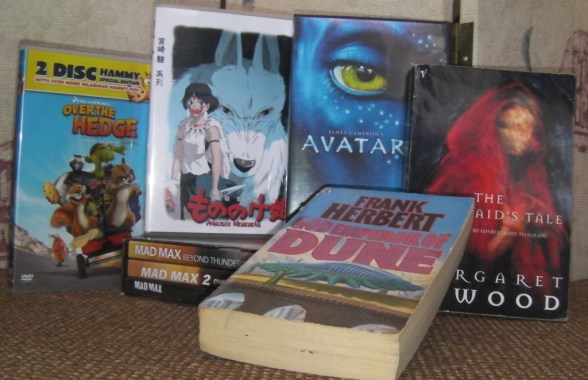
  • A Handmaid’s Tale – Margaret Atwood
  • Dark Sun (the Dungeons&Dragons books and role playing setting) – set on a fantasy world
  • Dune books – Frank Herbert – set on a world where the introduction of verdant life destroys arguably the most valuable source on the planet
  • Avatar  (movie)
  • Waterworld (movie)
  • Princess Mononoke (animé movie)
  • Mad Max (movie)

Science Fantasy – Other Planet

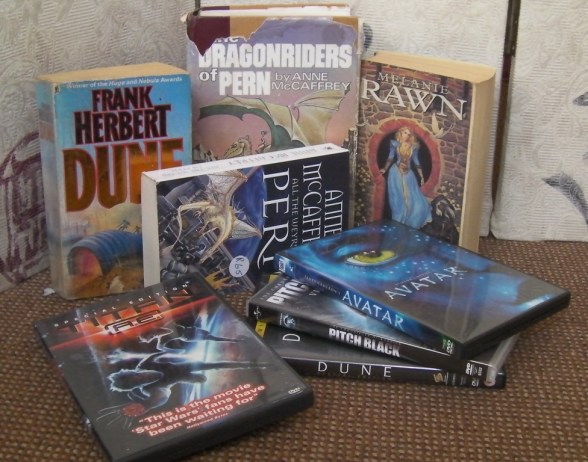
Science Fantasy is any form of fantasy that does not exclude technology as a whole. This means that it can be set in almost any time period (meaning, the setting can appear to be mostly mediaeval like Melanie Rawn’s The Ruins of Ambrai or it can be in a futuristic setting like Frank Herbert’s Dune). There are two main subgenres under this banner: Other Planet (this post) and Dying Earth (next post).

In Other Planet stories, the story takes place on another planet and may or may not include in-your-face technological advances. I originally thought I wasn’t entirely sure that I’ve encountered this kind of fiction, but, as I sat down to think about it, I realised that I have books by different authors and even some movies on DvD that are set on other planets – but are still fantasy.

To be fair, the Dying Earth stories often spill over into Other Planet stories. So, these two subgenres are really not typically used in exclusion of each other.

In a purely Other Planet setting, humans have typically ventured into space and have started colonising other planets, though humans may have been forcibly taken to the other planet(s) by alien races. Humans may or may not be taking colonisation overboard. There may or may not be other races/alien races. In some stories, the fact that it is a planet other than earth hardly ever come up as a theme. In others, the fact that Earth is the original planet the humans come from is part of the normal facts and it is often referenced.

Examples of Other Planet in literature include:

  • Melanie Rawn – The Exiles: The Ruins of Ambrai
  • Anne McCaffrey – The Dragon Books (there are many)
  • Frank Herbert – Dune

And in the movies:

  • Titan A.E.
  • Pitch Black
  • Avatar

The write priorities

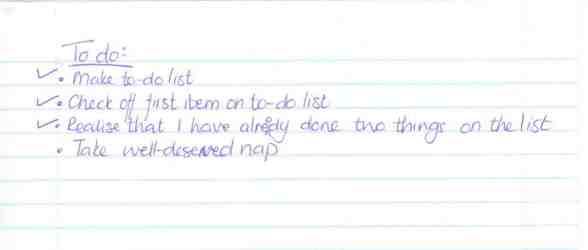
To-do List

Every so often you find yourself just not doing what you thought you would. For instance, I planned to enter at least one competition per month, write at least one blog entry per week and write at least 1000 words per day on either my fantasy story or my self-help book. But, I have found that it often becomes an either or situation.

During weeks where I manage to average 1000 words a day, I don’t get around to my blog and forget entirely about the competitions. During weeks where I write my blog entries, I get to maybe 2000 words total of story/self-help book. During months where I enter a competition, I inexplicably feel like my goals have been met and I just can’t concentrate on writing enough to actually write more than two blog entries and maybe 5000 words of story/self-help book.

It may sound silly, especially considering that I have about six hours a day to accomplish these meagre goals. But then, there are the endless chores and need-to-do’s around the house; the friends I haven’t seen in months who treat me to lunch; my general distractedness as an expectant mother (first child and everything); and the need to rest somewhere along the line.

At least I can promise you a short story during next month. I managed to write one this morning (for a competition with the driest topic ever). And I plan to actually write a bit on my story and my self-help book after lunch. All productive I am today!

Bangsian Fantasy

Bangsian Fantasy

Bangsian Fantasy, in my experience, is not a very widely-spread subgenre. It can be set in a whole range of realities, from our reality as we know it to a reality very close to ours, to something that is purely a flight of the imagination. It’s one binding characteristic is the featuring of a historical figure from our reality.

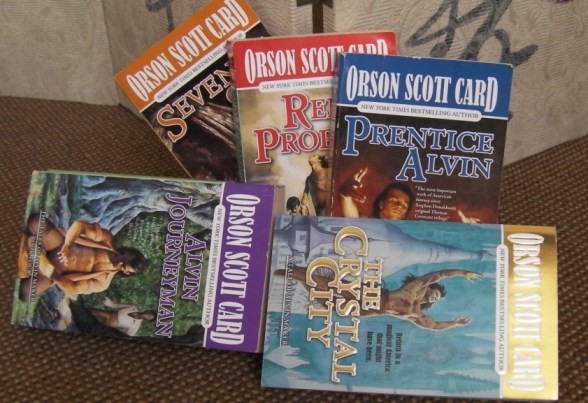
Since I really can remember reading only one series featuring Bangsian elements, I will have to use it as my basis here. Orson Scott Card’s Alvin Maker books don’t actually focus on the historical figures, but they do feature here and there. These books use a version of the world where things have happened a little different to what we see in the history books. The description you usually see on his books refer to “a magical America that might have been”. Napoleon Bonaparte specifically features in these books, having the ability to make people adore and obey him – yes, a maaaagical ability.

Now that I think of it, I’m fairly sure you are likely to find Bangsian elements in Steam Punk books and movies…also in Dark Fantasy.

Wikipedia gives a few examples of Bangsian Fantasy I have never read, so, you might want to check that out too.

Wuxia and Magical Girl

Before I started this blog, I had never even heard of these two genres. But as I read about them, I realised that I had actually encountered some of it before. Maybe not so much in literature, but certainly in movies and animé.

Wuxia is a mostly eastern fantasy subgenre where a character or a few characters have martial arts skills that border on magical abilities and sometimes frolick merrily in it. I’m not sure I can really elaborate without repeating myself more than a few times, so, here are some examples: Naruto (manga and animé), The Forbidden Kingdom (a movie from a few years back) and Kung Fu Hustle (a spoofy movie from the East).

Magrical Girl, as far as I have been able to glean from scanty Internet sources, is an animé fantasy subgenre (fairly popular, I might add) that revolves around a female main character who has some sort of quest or ability that sets her apart from her mundane peers. She might dedicate her entire life to it or may even practice only after school hours. Examples include Elfen Lied and Sailor Moon. I honestly haven’t seen much of these…though I have for some reason encountered the reportedly less common “magical boy” shows – BleachKekkai Genkai and Evangelion.

Don’t take me as the authority on this, though. As I said, I’ve really only dipped my toes in these two subgenres. Check out Wikipedia and do a Google search to get a better feeling for this.

Dark Fantasy

Horror, romance, comedy, action...

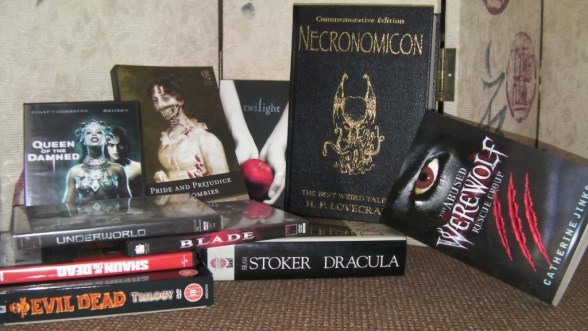
Dark Fantasy is a well-established subgenre, though you might not recognise the name. It is seductive, thrilling and sometimes down right cheeeeeesy. What is it? Vampires, werewolves, zombies, witches, demons and all manner of  nasties hiding in the dark. But, it’s not just scary stories… It comes in the form of horror, action, comedy, romance and more.

Most recently, the world has been abuzz with Stephenie Meyer’s Twilight series. Half the fanbase is violently upset and revolted by her take on vampires and the other half (most of which has only recently discovered this genre) are rabidly fanatic about it.

The basics are (usually): The story is usually set in the present or (starts off) in recent history; the basics of history and reality as we know it sets the background; and vampires, werewolves and all the other things that go bump in the night are the flavour that draw in the readers (and viewers) of this subgenre.

Some authors seduce their readers with the grim (and sometimes rather watered down) aspects of a romantic relationship with a dark lover. Some authors prefer to stick to keeping these dark creatures the Threat. Some authors pick at all the possible flaws in the myths and legends surrounding these beasties to make us laugh at the sheer ridiculousness of it all.

Examples you are likely to have encountered include: Anne Rice’s vampire and witch novels, inlcuding Interview with a Vampire, The Vampire Lestat and Queen of the Damned; Brahm Stoker’s DraculaDawn of the Dead (movie); H.P. Lovecraft’s Call of Cthulu and other novels….

Often, all the different nasties and beasties come together in the same stories…think  Underworld (movie); Buffy the Vampire Slayer; Vampire Diaries; TruBlood; this list really does go on and on…

Steam Punk

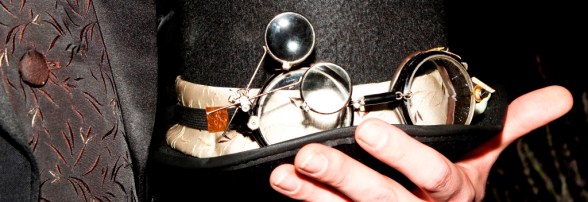
So, Steam Punk…I must admit that I have little exposure in this specific subgenre literature-wise. The general gist is: It is usually set in the Edwardian and/or Victorian eras or in a reality similar to that, but a few individuals in this setting possess technology is not quite historically…um, there. This technology is generally steam-based and is heavily associated with cogs and wheels and nuts and bolts. You can expect brassy finishes and mad scientists or loony inventors.

How can I so happily rant on about this without having read much on it? Well…there are a lot of movies and even some TV shows that feed you Steam Punk without you even noticing. In Wild Wild West, a movie featuring Will Smith and a few others, you encounter a giant mechanical spider that may have taken you by surprise. In Hellboy, there is the clockwork german assassin. In Warehouse 13, there is the inventor lady, HG Wells, with her freaky corset thinger and all kinds of other inventions… In the new Sherlock Holmes movies, you get a taste of the tech again. In an episode of Castle, there is a whole murder mystery revolving around a Steam Punk society (in modern times, of course).

In short, it’s a fantastic flavour that adds glam, whimsy and general awesome to an otherwise dull or normal background.

Mythic Fantasy

A lot of people confuse this subgenre with fairy tales. See, mythic fantasy uses characters and heroes and themes from myths and legends as a base for a fantasy story. Think of all the various Arthurian (King Arthur, Lancelot, Gwynevere, the Holy Grail) stories you’ve seen movies and series of, think of the comic books that borrow from Norse Mythology (Odin, Loki, Thor, Valkyries and the like). This subgenre is quite prolific. Back to the confusion between fairy tales and mythic fantasy – depending on how you look at it, the confusion is actually totally understandable. Some fairy tales (those with actual fairies and elves) use elements from Irish and European mythology.

One thing that originally set these stories apart was that mythic fantasy really targeted a teenage to adult audience (as opposed to children). Though, admittedly, the line is blurring more and more. Mythic fantasy also tends to be more on a more epic scale – you know, gods and kings making and breaking the world.

I’ve encountered a lot of mythic fantasy since I started reading. I don’t own all of them…and I think it’s because I read most of it when I was still borrowing books from the library rather than buying too many and just filling my shelves to their breaking point.

Examples include:

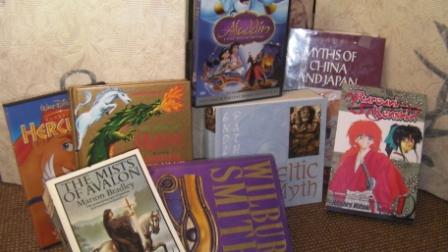
  • Wilbur Smith’s The Seventh Scroll, River God  and others (Egyptian mythology)
  • The Mists of Avalon by Marion Bradly (Arthurian legend)
  • The Forbidden Game by LJ Smith (Norse Mythology)
  • The TV shows like Hercules, Camelot, Merlin, Robin Hood and Spartacus
  • Movies like Arthur, First Knight, Robin Hood Prince of Thieves, The Mummy, Thor and many, many more

Fairy Tales

A fairy tale collection

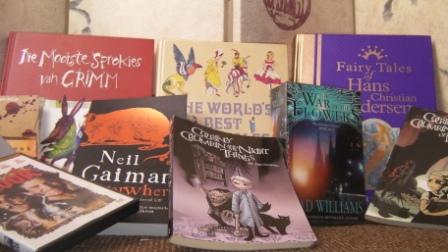
At last! A genre almost everybody knows! Fairy tales. Those that your parents and teachers probably read to you as a child. Hans Christian Anderson, The Brothers Grimm and a few others have brought us a vast array of stories that have seen many iterations and variations. Though these tales started off as far more grim (no pun originally intended) and sombre, the (usually) Disney versions we know today have formed our perception of the “fairy tale” to something far shinier and friendlier.

In the end, it really depends on you what you make of fairy tales and you are entitled to your opinion. Half my friends would skin me if I sold you the fluffy, happy version of fairy tales as the definition for fairy tales. Their argument is that the original fairy tales were cautionary tales to teach children about the not so shiny aspects of life. Little Red Riding Hood being about not talking to strangers (see, Little Red Riding Hood didn’t survive in the original story, the wolf did), The Little Mermaid being a tale about…heck, I have no idea…but in the original story she ends up not married to the prince, but floating on the surface of the sea as lifeless foam. You catch the gist?

Most people simply don’t like dealing with this kind of reality in a fairy tale, so they tend to side with the happy happy kiddies versions you get in stores and Disney movies these days. In fact, I believe people often actually say stuff like “life isn’t a fairy tale, you have to deal with the facts”. I think these people are really missing the original point.

You can tell which side I’m also on, can’t you? Lol Whoopsie.

Anyhow, modern versions of fairy tales can be found in a lot of Urban Fantasy stories, like The Dresden Files by Jim Butcher, The War of the Flowers by Tad Williams, Courtney Crumrin by Ted Naifeh and Neverwhere by Neil Gaiman. Of course, all of these focus a lot more on the…scary (or should I say “realistic”?) side of fairy tales in a much more “adult” way.